
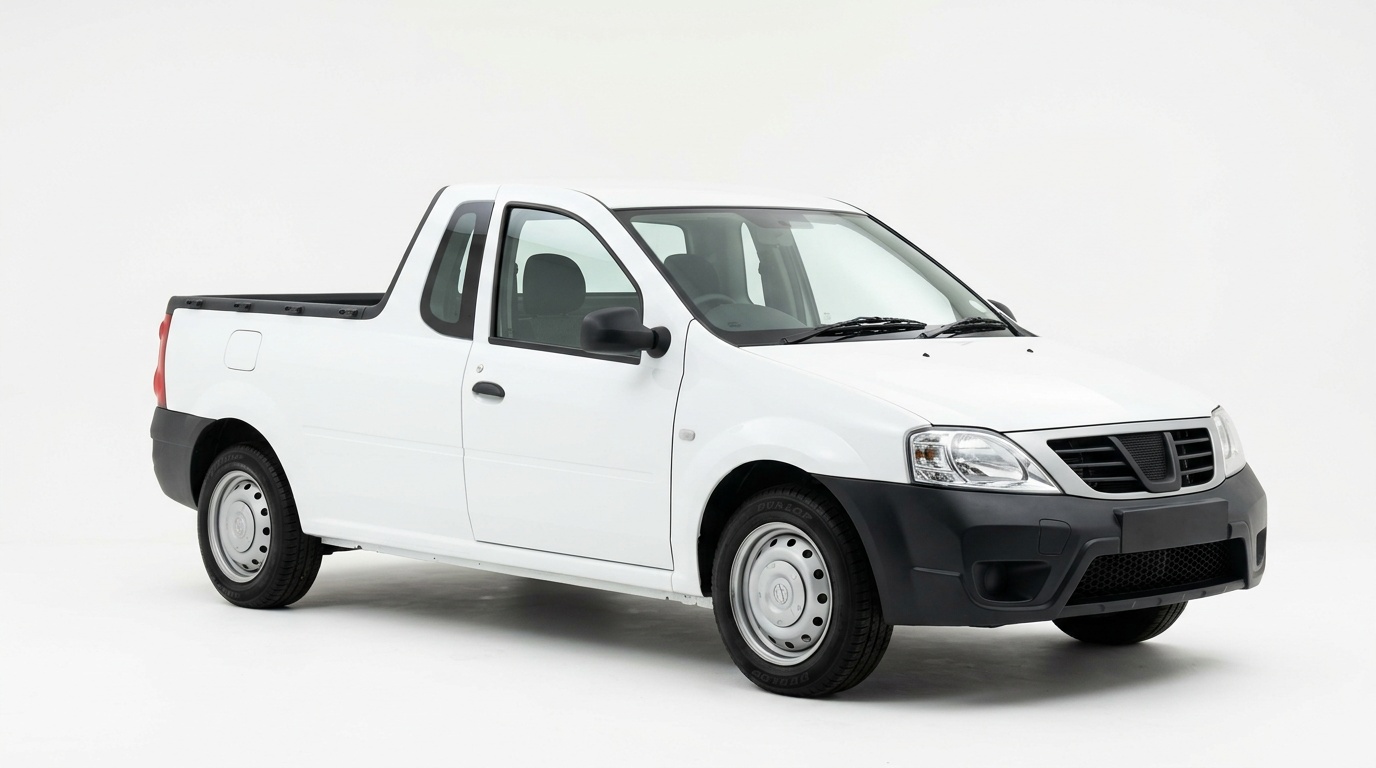


Nissan 1400 (1971-2008). Need a part? Browse used Nissan 1400 parts or get a quick WhatsApp quote.
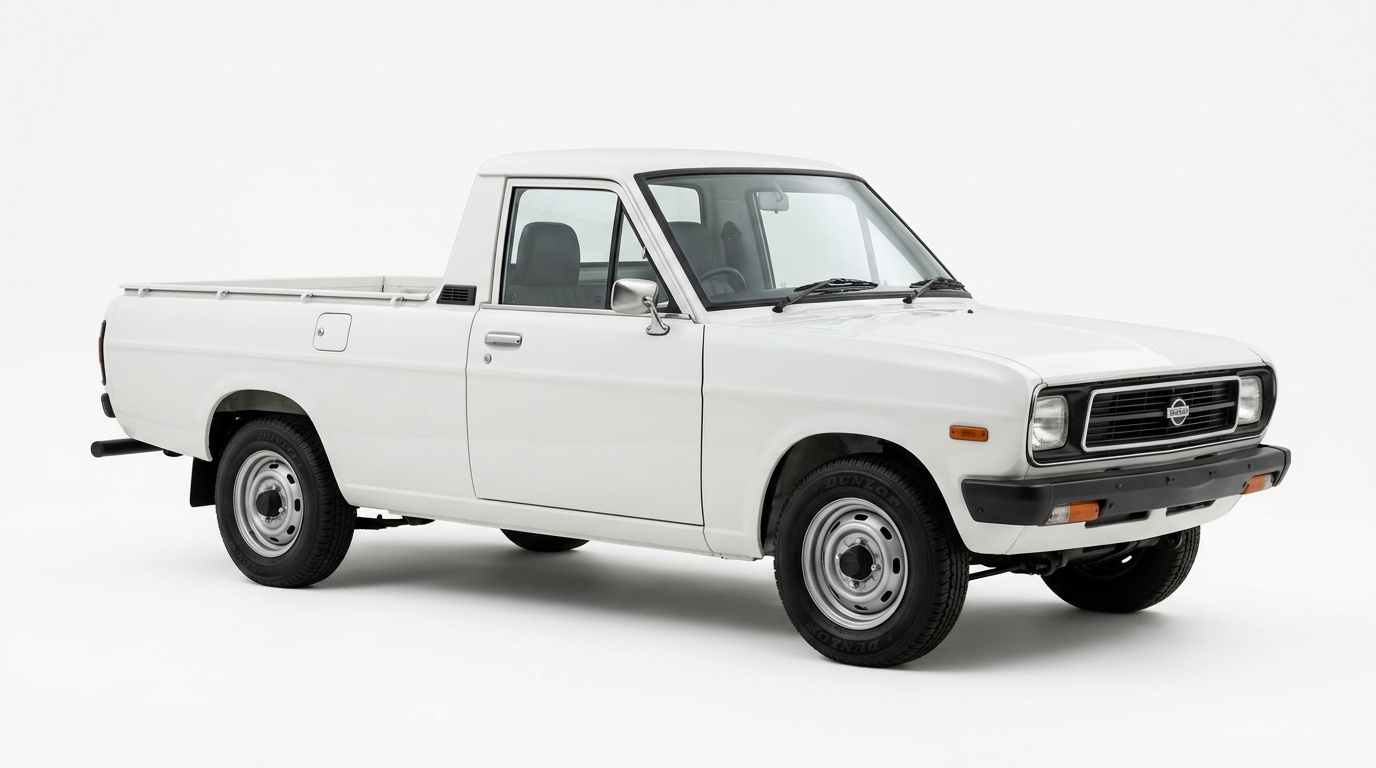
The Nissan 1400 — also known as the Champ, the Nissan B140 (badge code) and to a generation of South African tradesmen as just “the 1400” — was built in Rosslyn for an extraordinary 37 years. Production ran from 1971 to 2008, with very few major changes to the shape but several to what was under the bonnet. If you own one and have just walked into a parts counter only to be asked “is it a carb or an EFI?”, here is how to tell, and why the answer matters.
A quick history of the engine
The 1400 went through three engine variants in SA, all roughly 1.4 litres, all four-cylinder petrol:
- A14 (1971 to roughly 1986) — the original, twin-choke carburettor, points-and-condenser ignition on the earliest trucks, electronic ignition later. Found on early Champ and 1400 LDV bakkies.
- GA15 carburettor (mid 1980s to roughly 2003) — the upgrade from A14. Single-barrel carb, electronic ignition, no oxygen sensor. Most “ordinary” 1400s in SA from the late ’80s onward.
- GA15DE EFI (roughly 2003 to 2008) — the late run. Multi-point fuel injection, oxygen sensor, knock sensor, OBD-II port, distributor still. This is the model badged “1400 Champ” for the last five years of production.
The GA15 EFI was introduced specifically to meet emissions regulations the carb could no longer pass. Mechanically the bottom end is very similar to the carb GA15 — the differences are all in the head, intake, and fuel system.
Why it matters when you order parts
A carb 1400 and an EFI 1400 are 80% the same vehicle but the 20% that differs is exactly the 20% that breaks. If you walk in and ask for an “ignition coil for a 1400” without specifying, you have a 50/50 chance of getting the wrong part — the carb truck uses a single canister coil, the EFI uses a different unit driven by the ECU. The same applies to:
- Distributor cap and rotor — different on carb vs EFI
- Cylinder head — completely different intake port shape
- Fuel pump — mechanical pump on the carb, in-tank electric pump on the EFI
- Air cleaner assembly — large round housing on the carb, rectangular plastic box on the EFI
- Throttle / intake manifold — utterly different
- Injectors, fuel rail, ECU, sensors — exist only on the EFI
Even simple items differ. The thermostat housing changed, the rocker cover changed, and the engine wiring harness is a different beast altogether.
How to identify carb vs EFI in two minutes
You don’t need to read the build plate to figure this out. Open the bonnet and look at the top of the engine.
- Carburettor visible at the top of the engine — sits dead centre under a round air cleaner. There will be a fuel line bolting onto the side of the carb. It is a carb.
- Plastic intake manifold with four injector connectors — no carb, four injectors lined up along the intake. It is the EFI.
- Mechanical fuel pump bolted to the side of the block — carb. EFI has no mechanical pump.
- OBD-II port under the dash, near the bonnet release — EFI only. Carb 1400s have no diagnostic port.
If you are buying or pricing a truck sight-unseen and only have the year, the rule of thumb is:
- Pre-2003 build year — carburettor (almost always)
- 2003 to 2008 build year — EFI
- Borderline 2002 to 2004 — check the engine itself
Reading the build plate
The build plate is mounted on the firewall, on the upper rear of the engine bay, often right below where the bonnet meets the body. It carries:
- VIN — 17-digit chassis number (later trucks) or shorter chassis prefix on early A14 ones
- Engine type —
A14,GA15S(carb), orGA15DE(EFI) - Model code —
B140for almost all of them - Production date — month and year
The engine type field is the definitive answer. GA15S = carburettor. GA15DE = EFI. The DE suffix is Nissan’s internal designation for double-overhead-cam, electronic fuel injection. The 1400’s GA15DE is in fact a SOHC engine despite the badge — Nissan reused the suffix loosely on the budget 1400 build.
The engine number is also stamped on the block itself, on the right-hand side near the alternator. It will start with A14, GA15 or GA15DE followed by a 6 or 7 digit serial. If the build plate is missing or unreadable (common on weathered farm trucks), this stamping is your fallback.
A note on imported engines
Some 1400s on the SA used market have had engine swaps. Pulsar GA16DE and Sentra GA16DE motors are a popular upgrade — more power, fuel-injected, fits the bay with adapter mounts. If you are buying a 1400 that “feels too quick”, it may not have its original engine. The engine number on the block will not match the build plate in that case. This is fine for the vehicle but matters when you are sourcing parts — you need parts for whatever is actually fitted, not for what the build plate says.
Need parts?
We stock spares for all three 1400 variants — A14, GA15 carb, and GA15DE EFI — including engines, gearboxes, body panels, and trim. If you are not sure which variant you have, send us a clear photo of the build plate and the engine bay on WhatsApp and we will identify it for you. Browse used Nissan 1400 parts or request a quote.
Last updated: 2026-05-08
Need a part for your Nissan 1400? Send us the VIN and what you're after — we usually quote within 2 hours.